What the Academy does
Four objectives, one connected community.
{{ o.text }}
How it works
Built as a continuous-improvement loop.
The Academy runs on the Plan–Do–Study–Act method. Select a stage to see what happens inside it.
{{ pdsaCurrent.k }} — Active stage
{{ pdsaCurrent.t }}
- —{{ pt }}
{{ pdsaCurrent.note }}
The opportunity
Building community and skills through the Academy will improve faculty engagement and support — and contribute to a stronger educational climate across the health system.
The Model
What a teaching academy is — and why it fits a community-based school.
A teaching academy is a formal member organization of faculty recognized for their contributions to an institution's educational mission — with leadership and dedicated resources, not merely a group of honored teachers.
{{ m.title }}
{{ m.body }}
The academy movement
First academy — the Society of Teaching Scholars, Medical College of Wisconsin.
Member organizations counted by the Academies Collaborative (2021) — most at traditional academic medical centers.
A comparatively rare thing: an academy built from a community-based medical school.
Why it matters
Academies grew as a structural response to the educational mission being crowded out by research and clinical demands. Students benefit from strong faculty role models and often return to their training sites to practice; physicians, in turn, gain autonomy, mastery, and purpose from clinical teaching.
Experience & Curriculum
The member journey, made concrete.
A welcome dinner and get-to-know-you session, six remote lunch-and-learns chosen by the cohort with CME credit, then reflection and membership.

{{ a.title }}
{{ a.desc }}
Build a sample track
Cohorts choose six sessions from the topic menu.
Select topics to assemble an illustrative track. Real cohorts pick the six that fit their teaching.
- ✓{{ s }}
No sessions yet. Choose from the menu to build a track.
Illustrative only — mirrors how real cohorts select their six sessions.
Who it's for
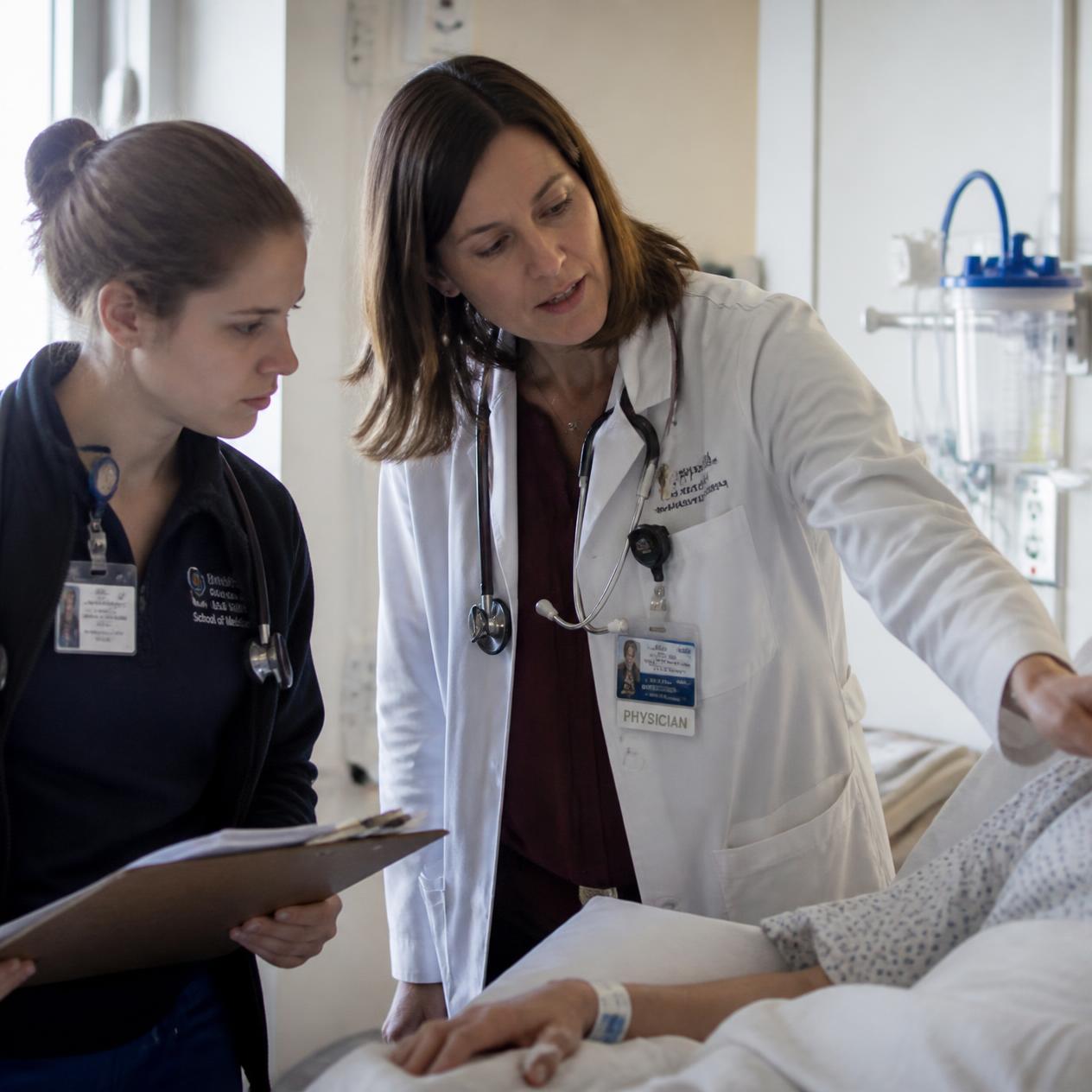
The pilot cohort is 6–8 physicians practicing in the Avera system in Sioux Falls and neighboring communities.
The commitment
Attend at least four of the six ~30-minute sessions. CME credit is provided. The pilot cohort launches August 2026.
What members gain
Identity as a valued SSOM teacher, teaching-skill development, community, and a hand in the Academy's growth. Membership and Teacher status count as service to SSOM and can support promotion documentation for volunteer faculty.
Membership tiers
{{ ti.name }}
{{ ti.desc }}
In progress: an advisory committee is being formed and membership-tier criteria finalized.
Evidence & Impact
Rigor first: how the Academy measures itself.
The Academy treats its own program as a study — with a defined method, instruments, and success measures, and an honest empty state where data is still pending.
{{ s.t }}
{{ s.summary }}
Where we are
The foundation is built; the pilot launches August 2026.
Done
- ✓{{ d }}
Underway
- ●{{ u }}
{{ ph.phase }}
{{ ph.title }}
{{ ph.body }}
Assessment approach
- —{{ x }}
Success measures the program has defined
- →{{ x }}
Results arrive after the first cohort completes.
The pilot cohort launches August 2026 with a baseline survey in place. Outcome data, participant reflections, and engagement figures will appear here as each cycle completes — modeling transparent, iterative scholarship rather than a static brochure.
Roadmap · cycle two
Phase 1 (foundation) is complete and the pilot launches August 2026. From there: review participant feedback, seat an advisory committee, then extend to other Avera sites, additional health-system partners, and regional SSOM campuses.
Scholarship & dissemination
Planned venues include the AAMC Central Group on Educational Affairs (CGEA), MedEdPortal, and Teaching and Learning in Medicine — turning the pilot into shareable scholarship.
Why It Matters
Value that compounds — for faculty, partners, and the school.
Engaged teachers become more fulfilled physicians, who stay, who become the role models who draw the next generation — many of whom return to South Dakota to practice.
{{ v.statNote }}
{{ v.title }}
{{ v.body }}
Help build the community that keeps physicians teaching.
Get Involved
Join the community.
Three ways to take part — as a member, an advocate for a colleague, or a partner.